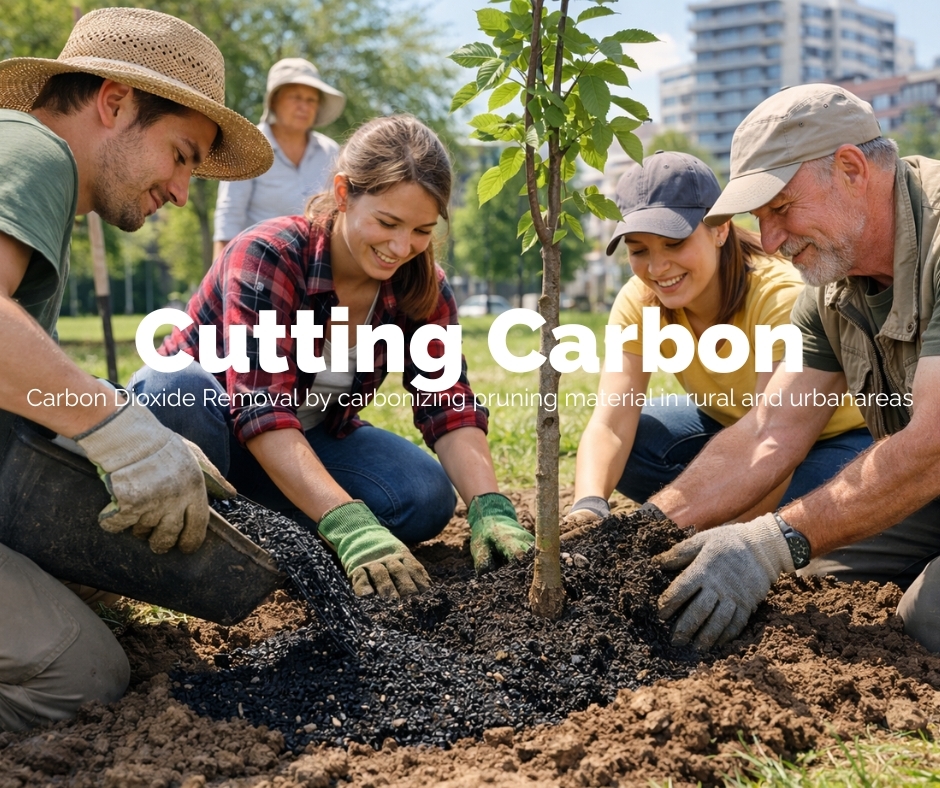
Cutting Carbon – Carbon Dioxide Removal by carbonizing pruning material in rural and urbanareas

Carbon Dioxide Removal through Biochar from Pruning Residues Duration: December 2025 – April 2028Programme: EUKI – European Climate Initiative About the Project Cutting Carbon is an international climate action project aimed at accelerating the creation of carbon sinks across Southeast Europe and the wider Balkan region. By converting pruning residues and organic waste into biochar, […]

Carbon Dioxide Removal through Biochar from Pruning Residues

Duration: December 2025 – April 2028
Programme: EUKI – European Climate Initiative

About the Project

Cutting Carbon is an international climate action project aimed at accelerating the creation of carbon sinks across Southeast Europe and the wider Balkan region. By converting pruning residues and organic waste into biochar, the project promotes sustainable land management, strengthens climate resilience, and supports healthier urban and rural ecosystems.

The project combines scientific research with local implementation to reduce greenhouse gas emissions, improve soil quality, and contribute to long-term ecological sustainability.

Partnership

The project is coordinated by Manfred-Hermsen-Stiftung (Germany) in partnership with:

  • Giacche Verdi – Italy
  • Eco Logic – North Macedonia
  • Argonauta – Croatia

Objectives

Cutting Carbon aims to:

  • Increase carbon dioxide removal through biochar application
  • Promote sustainable land and urban green space management
  • Improve soil health and agricultural resilience
  • Support climate adaptation in cities and rural areas
  • Strengthen environmental awareness and community engagement

Key Activities

The project implements a range of practical and educational actions, including:

  • Hands-on workshops and training for municipalities, farmers, youth, and schools
  • Pilot applications of biochar in urban trees, green roofs, and agricultural land
  • Seminars and conferences to share knowledge and best practices
  • Monitoring and evaluation of environmental impacts
  • Development of tools and resources to support replication across Southeast Europe

Impact

Cutting Carbon contributes to significant carbon dioxide removal by sustainably carbonizing organic material that would otherwise be burned or discarded. Initially implemented in Mediterranean contexts, the approach is designed to be transferable to similar climates, supporting broader climate mitigation efforts.

The project strengthens smallholder farming systems by improving soil fertility, productivity, and income opportunities, while also enhancing urban ecosystems through greener cities, better water retention, and reduced climate stress.

By actively involving citizens—especially young people—Cutting Carbon fosters climate awareness, empowerment, and long-term engagement, helping communities take confident action for a more sustainable future.
OTHER News Projects

Еко Логик и ЈУ Детски дом „11 Октомври“ – Скопје потпишаа Меморандум за соработка

Еко Логик и Јавната установа Детски дом „11 Октомври“ – Скопје потпишаа Меморандум за соработка, со кој поставуваат темели за долгорочно партнерство насочено кон создавање нови можности за личен развој, еколошка едукација и активно учество на децата и младите во заедницата. Партнерството претставува важен чекор кон заедничко делување во области од особено значење за идните […]

Read more

Балканот и циркуларната економија: Локални приказни што инспирираат 

Циркуларната економија сè повеќе се применува во различни сектори – од образование и локални заедници до индустриски системи за производство на енергија и материјали. Био-отпадот во овој контекст претставува клучен ресурс кој овозможува создавање енергија, ѓубрива и нови производи, наместо негово депонирање. Фото:https://www.magnific.com/free-photo/composition-compost-made-rotten-food_17662485.htm#fromView=search&page=1&position=12&uuid=150e8d17-4682-419f-84aa-c94cdfc7a49f&query=Fertilizer+soil+food+waste+  Кога зборуваме за циркуларна економија и управување со био-отпад, често мислиме дека […]

Read more

Eco Logic Joins Horizons of Innovation Forum 2026 as Co-Organizer: Building Partnerships for Europe’s Green and Digital Future

On 1 December 2026, the innovation ecosystem of the Western Balkans and Europe will gather in Banja Luka, Bosnia and Herzegovina, for the third edition of Horizons of Innovation Forum 2026—a leading international event dedicated to transforming innovative ideas into impactful European collaborations. As a co-organizer, Eco Logic is proud to contribute to a forum […]

Read more

DIFERAL Newsletter#4

Напредокот на проектот DIFERAL кон пилотирањето и пуштањето во употреба на МООС платформата. Конзорциумот на проектот DIFERAL се состана во Тампере, Финска, во јуни 2026 година, на четвртиот Транснационален состанок на проектот и едукативниот настан ULOS-UT-OUT. Партнерите го разгледаа досегашниот напредок, дискутираа за претстојната пилот-фаза и гидоговорија завршните активности потребни за трансформирање на Рамката на […]

Read more

Eco-Competent

Eco-Competent is a European project that aims to strengthen the capacity of youth workers to support young people facing climate-related challenges and eco-anxiety. As concerns about climate change continue to grow, many young people experience feelings of uncertainty, fear, and helplessness about the future. At the same time, they are motivated to make a positive […]

Read more

Од отпад до производ: Како био-отпадот станува дел од нашето секојдневие 

Био-отпадот претставува органски отпад кој потекнува од домаќинствата, пазарите, градините и прехранбената индустрија. Во оваа категорија спаѓаат остатоци од овошје и зеленчук, талог од кафе, лушпи од јајца, лисја и трева. Иако најчесто се третира како отпад, био-отпадот претставува вреден ресурс. Во контекст на циркуларната економија, тој се користи како суровина за создавање нови материјали, […]

Read more