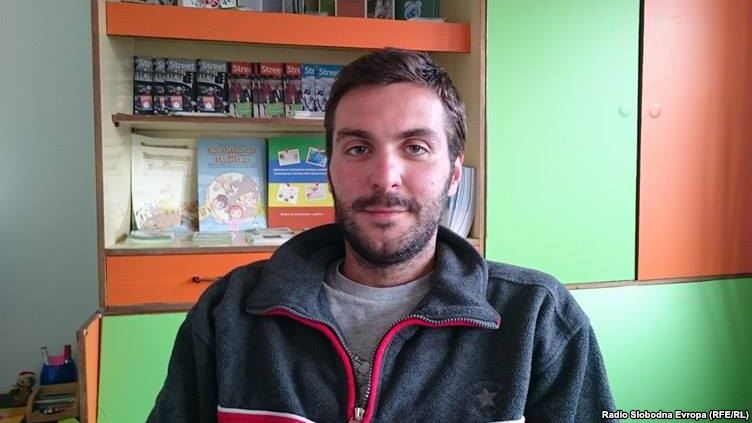
Energy efficiency, sustainable transport, preservation of the environment is only one part of educative activities conducted by the organization “Eco Logic”, which conducted them for several years in a few schools in Skopje; municipalities of City Centre, Karposh and Ilinden as a part of informal education. Our hopes about more aware generation regarding ecology are high, as stated in a discussion with Radio Slobodna Evropa by environmental engineer and president of the organization Nikola Neshkoski.
In a situation where Macedonia is faced with serious and grave ecological problems, to what extent an education of this kind can contribute to improving the quality of the environment?
The informal education in Macedonia, although not recognized as in several European countries, as an education can contribute a lot, especially regarding topics like the environment. “Eco Logic” has quite a substantial experience in conducting various methods in elementary schools, dealing with informal education of ecology. From ecology, subtypes can be derived: energetic efficiency, waste, reusing and so on, where youngest children can learn about ecology and environment through creative and innovative methods. Our hope for the future to come is focused on creating more aware generations than the present ones.
What is the rate of interest among pupils?
The pupils are incredibly interested. That can be concluded by the way our organization conducts one year and two years of an education with the same students of an elementary school. For example, we start with pupils of the 5th grade and for those of 5th, 6th and 7th grade we apply the same type of education, which means we use the same educative methods for each class. As we move from one phase of the training to another, the interest as well as the knowledge children acquire is incredibly obvious and increased. The last activity proves that the interest of children in such activities is immense – students from one school in Skopje were motivated to create an Eco manual with the help of their mentor teachers and of course the team “Eco Logic”.
Which other methods are used to get the attention of pupils?
Most of the time we use methods of showing interesting and creative materials, regarding design and content as well. The design is very different compared to the regular school books, which is the first thing a child notices and from that it depends how much the pupil want to use that certain book. Second is the content based on fun games and activities. Our educative materials are based on different tasks that are interesting during the solving process. We also use crossword puzzles, multiword puzzles, riddles, DIY tasks, experiments and so on.
According to you, should the informal education methods become a part of the formal education as well?
No doubt! We do not want to offend or degrade, however the way formal education and classes are conducted most of the time is conducted in a familiar way that pupils listens while the teacher talks. In our case, our introducing as a team lasts about five minutes, and the rest of the 35 minutes of the class are used for mutual interactive activities with the children, so in a way we work by means of practical ways. We shouldn’t just lecture the pupils with no substantial meaning underneath and let them forget the lecture afterwards – we should educate students through practical examples.
Link to original story: Radio Slobodna Evropa